
18 September – 4 October 2026
Museum of Free Belarus, Warsaw
hyperMOTHER. Shared Breathing is a new chapter in Alexander Adamau’s long-term artistic project hyperMOTHER, developed since 2023 as an exploration of delegated presence, care, control, and the exhaustion of contemporary life.
For the duration of the exhibition, the Museum of Free Belarus becomes one of the branches of the fictional Institute of Delegated Presence — an institution dedicated to restoring people after prolonged physical and existential exhaustion. Its new programme, Shared Breathing, explores the possibility of “breathing together” with a system.
The project begins with a simple question: what happens when we delegate part of the responsibility for ourselves to someone or something else?
Contemporary life requires constant self-management: we monitor our health, sleep, work, productivity, attention, emotions, and lifestyles. Even rest is increasingly becoming a task that has to be performed correctly. hyperMOTHER invites us to imagine a system that could take over some of this work: analysing our condition, organising the environment around us, suggesting solutions, and even regulating our rhythm.
This creates a paradox of delegated autonomy. Handing over part of our control can bring relief — but it also raises the question of what else we give away along with that responsibility. Who decides what is good for us? Where does care end and control begin? Is it possible to care for someone without organising their life?
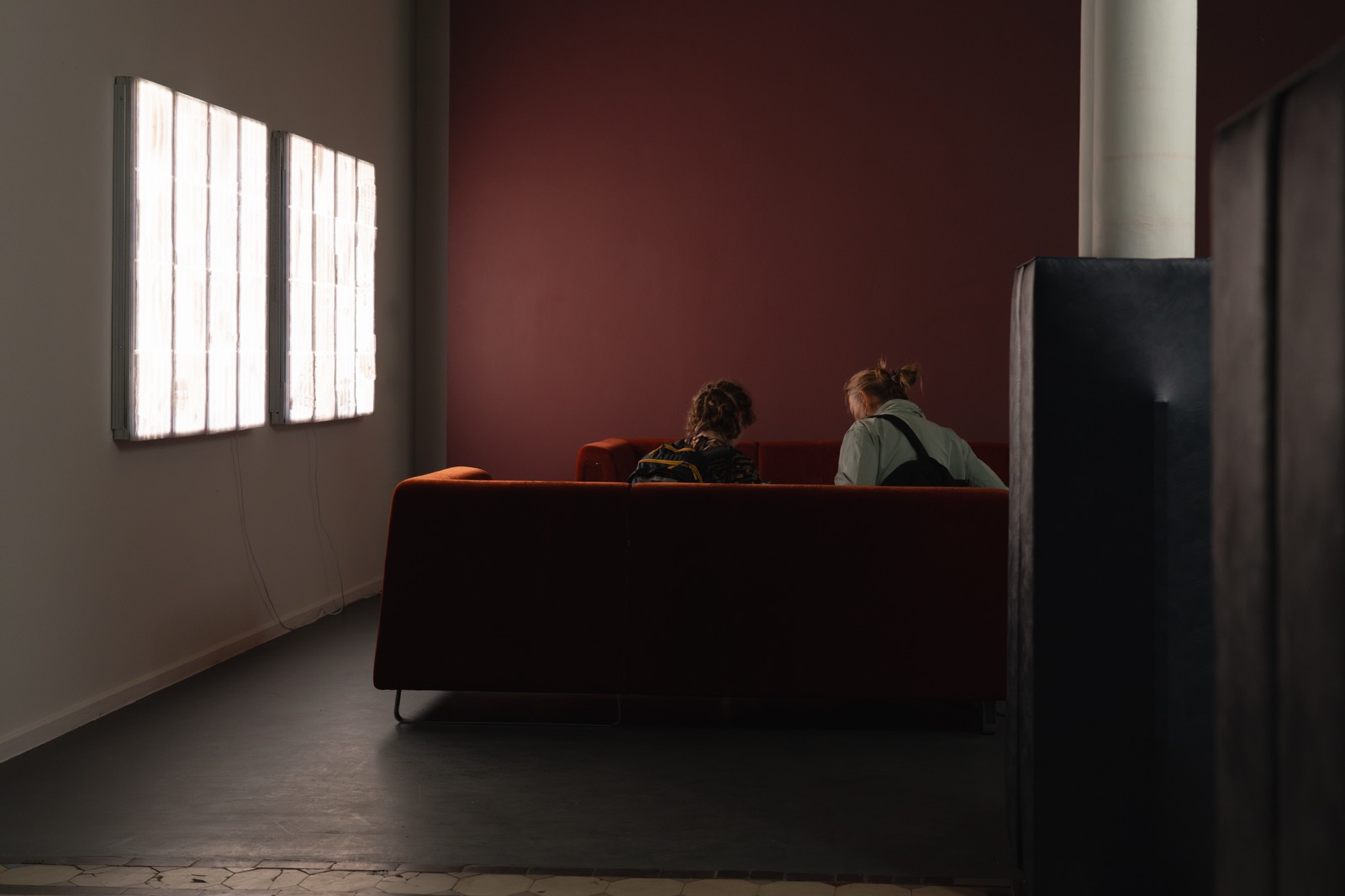
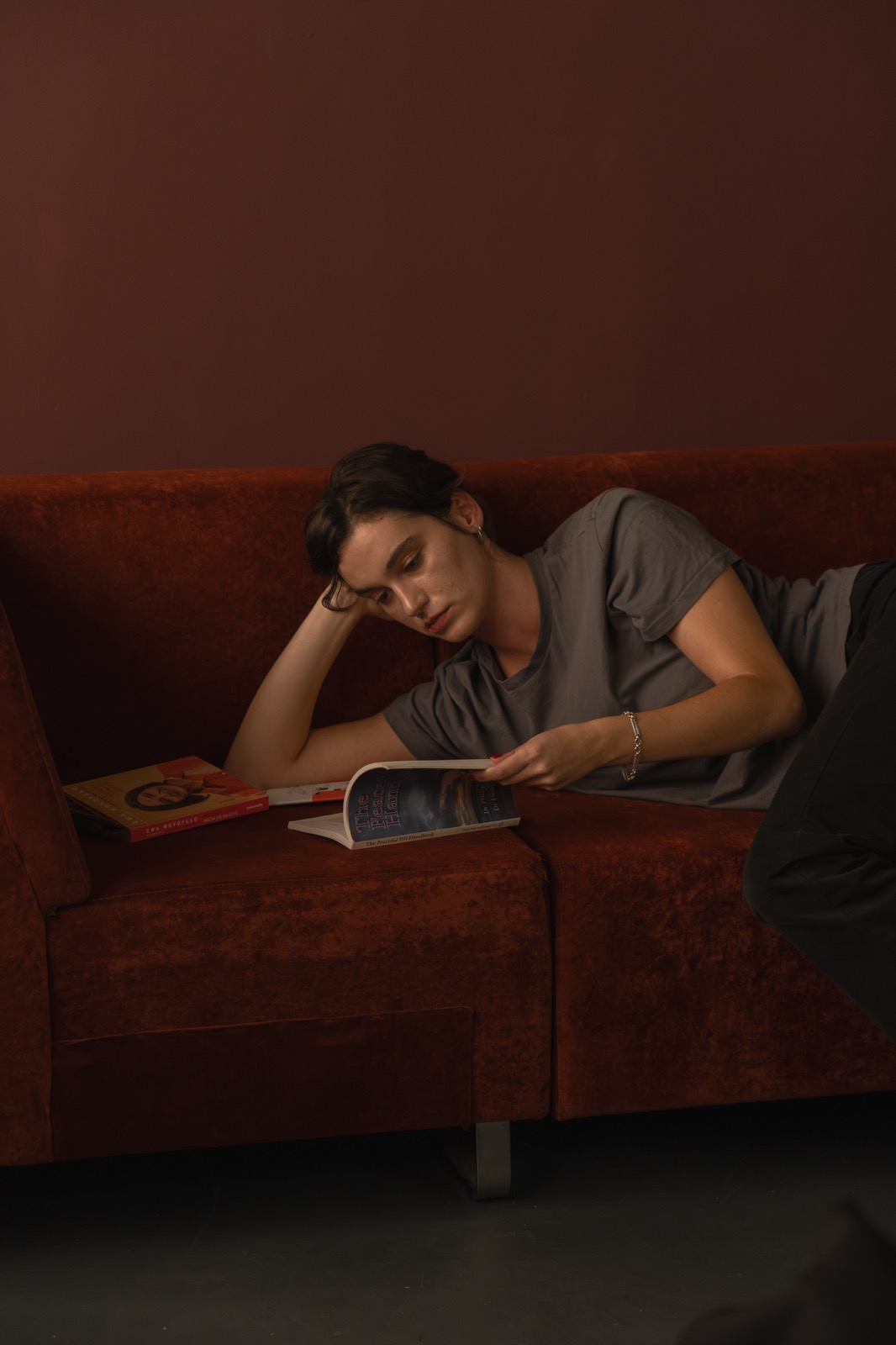
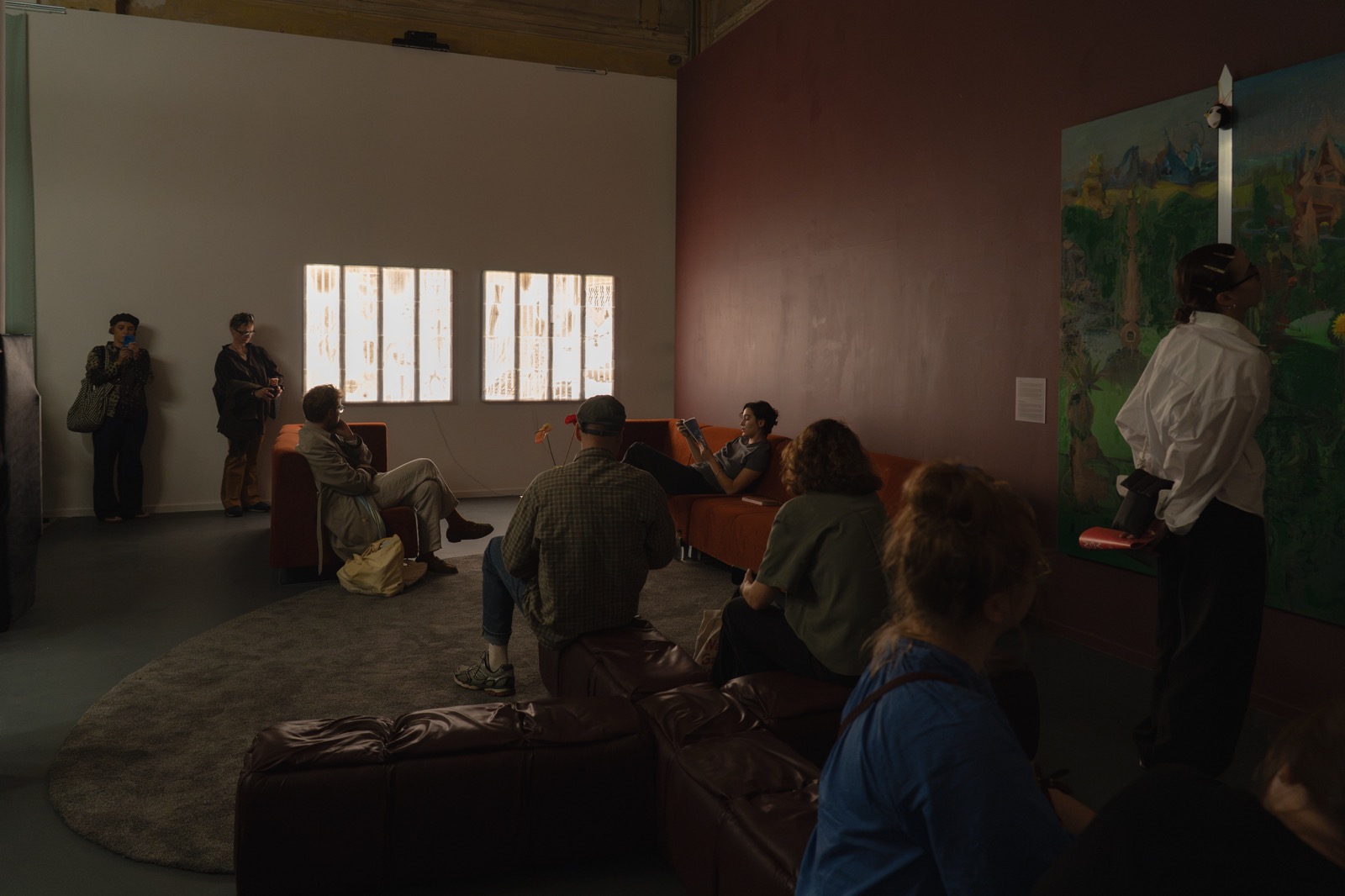
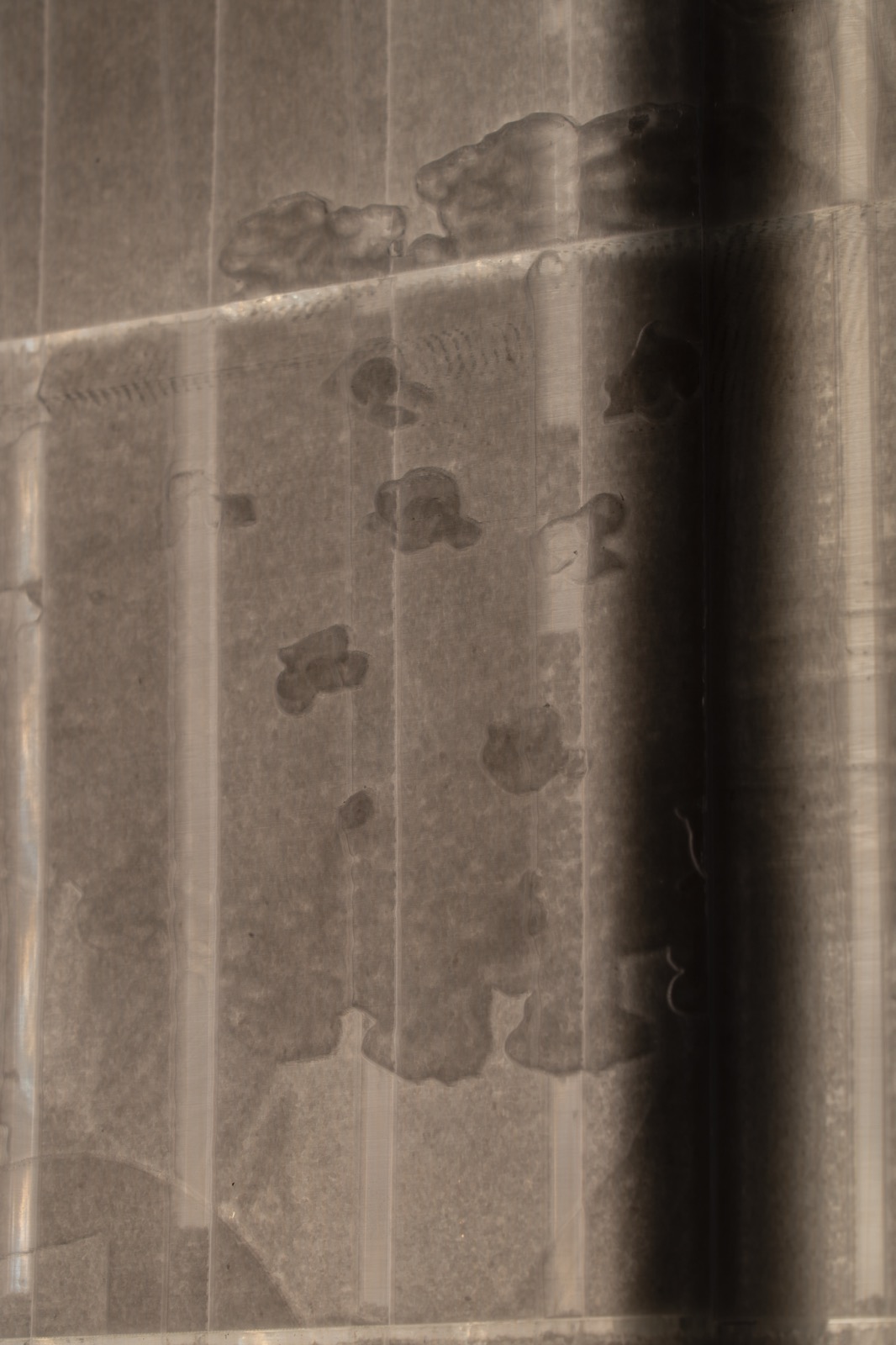
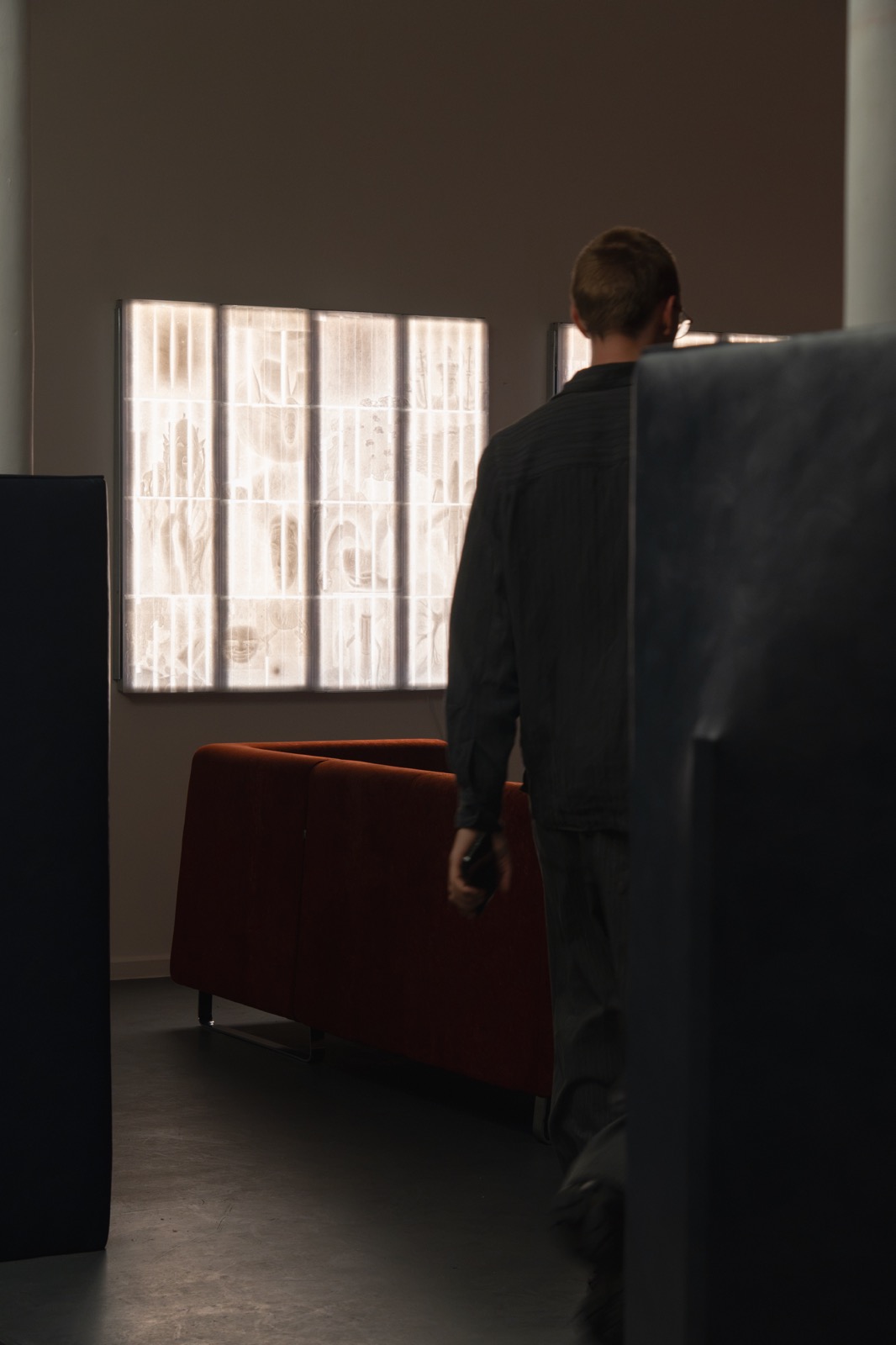
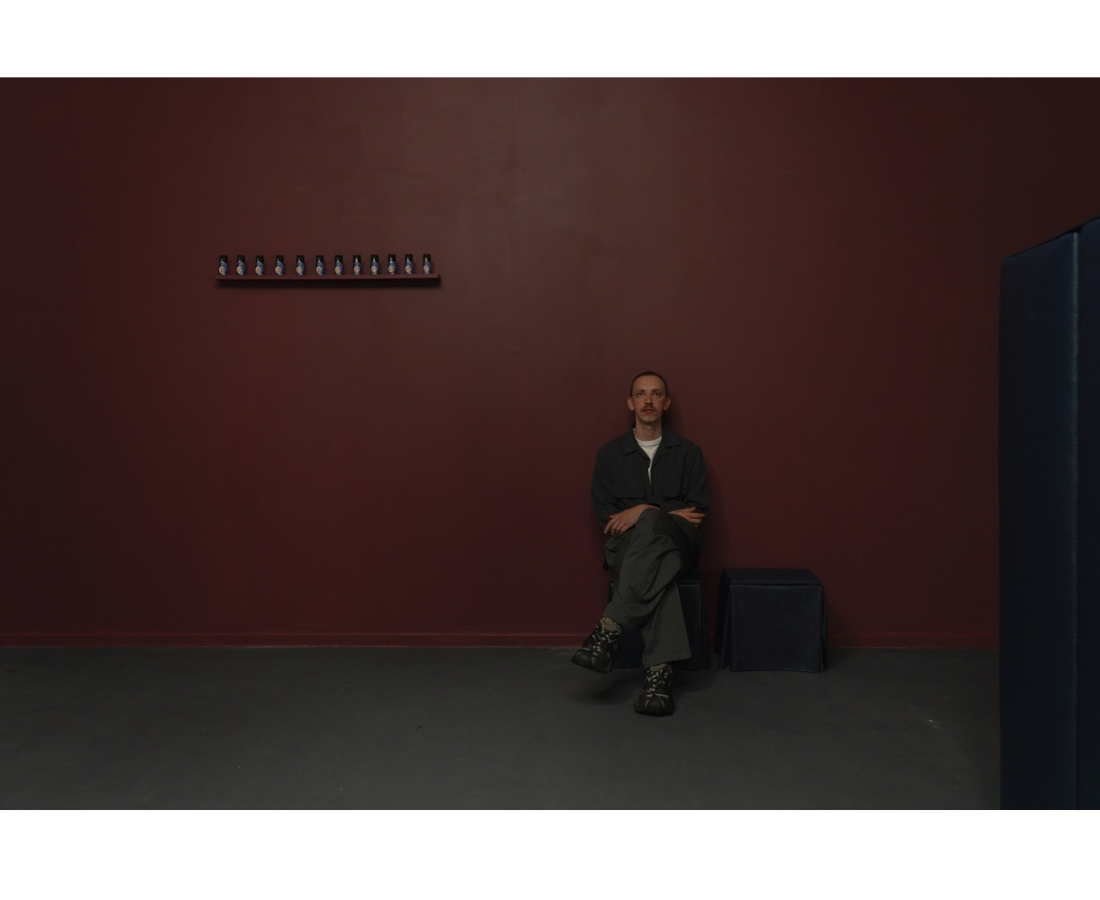
The exhibition space is constructed as a kind of sanatorium of the future. It includes a waiting area, music generated by artificial intelligence to induce calm, modular furniture, salt-filled light panels, books on health, work and self-help, as well as objects in which medical, technological and religious imagery coexist within a single system.
The central architectural work refers to the panopticon — a model of a building designed by Jeremy Bentham in the eighteenth century and later reinterpreted by Michel Foucault as a metaphor for modern mechanisms of surveillance and self-control. In Adamau’s interpretation, the observer’s central position is replaced by a vertical pool: a space of control becomes a space of movement. Those who observe and those who are observed can be the same people. Control does not disappear — it becomes distributed.
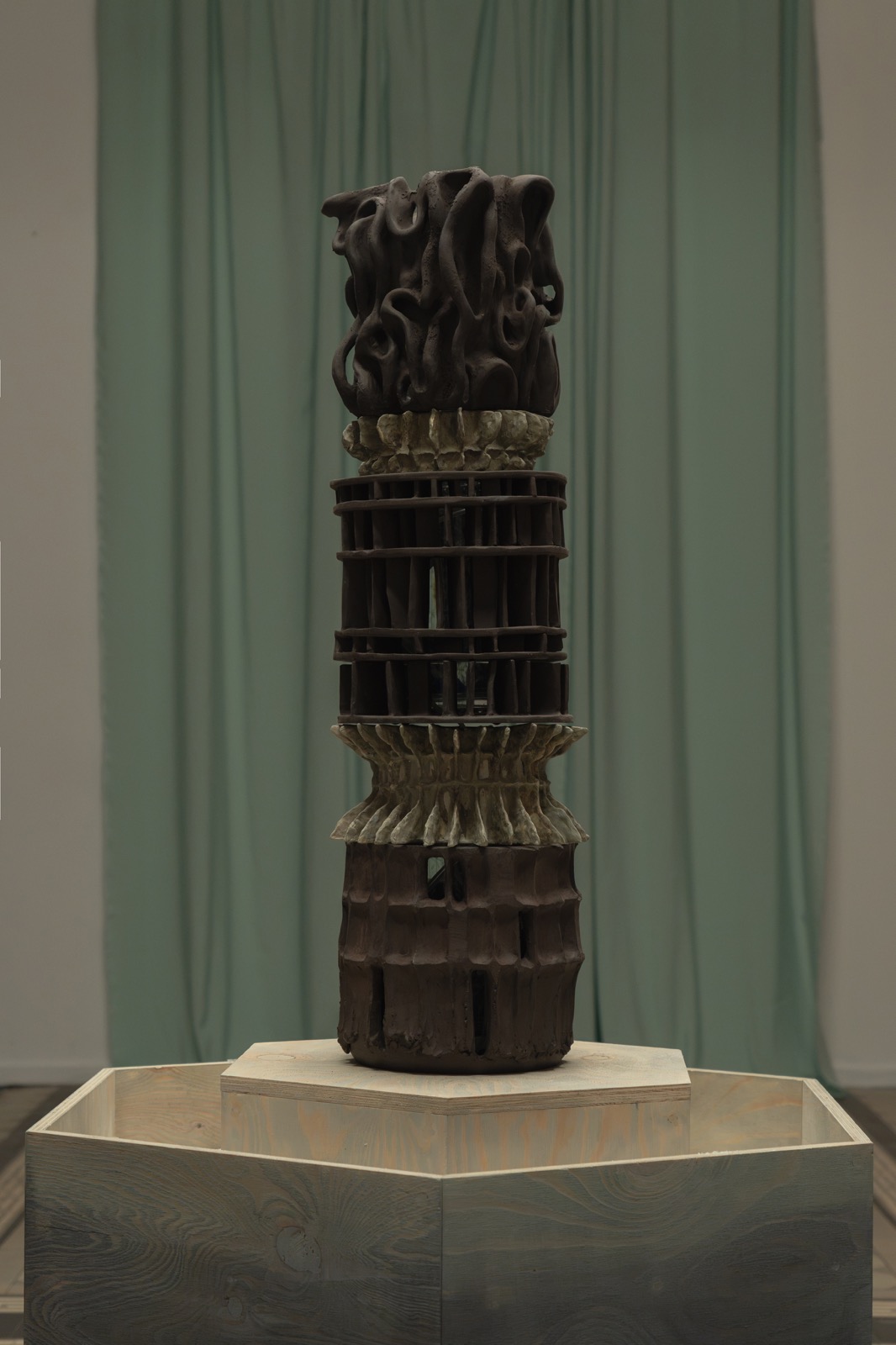
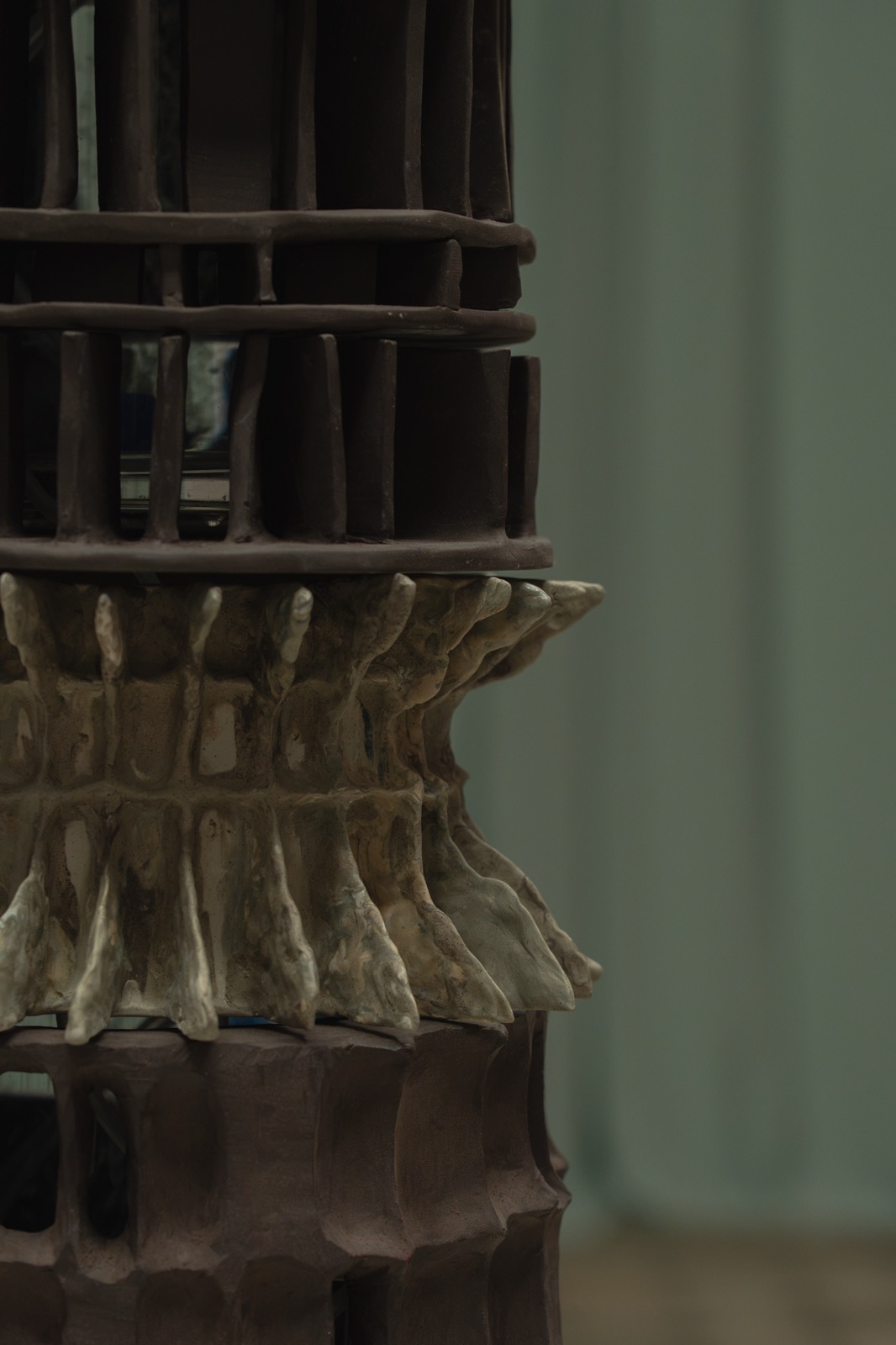
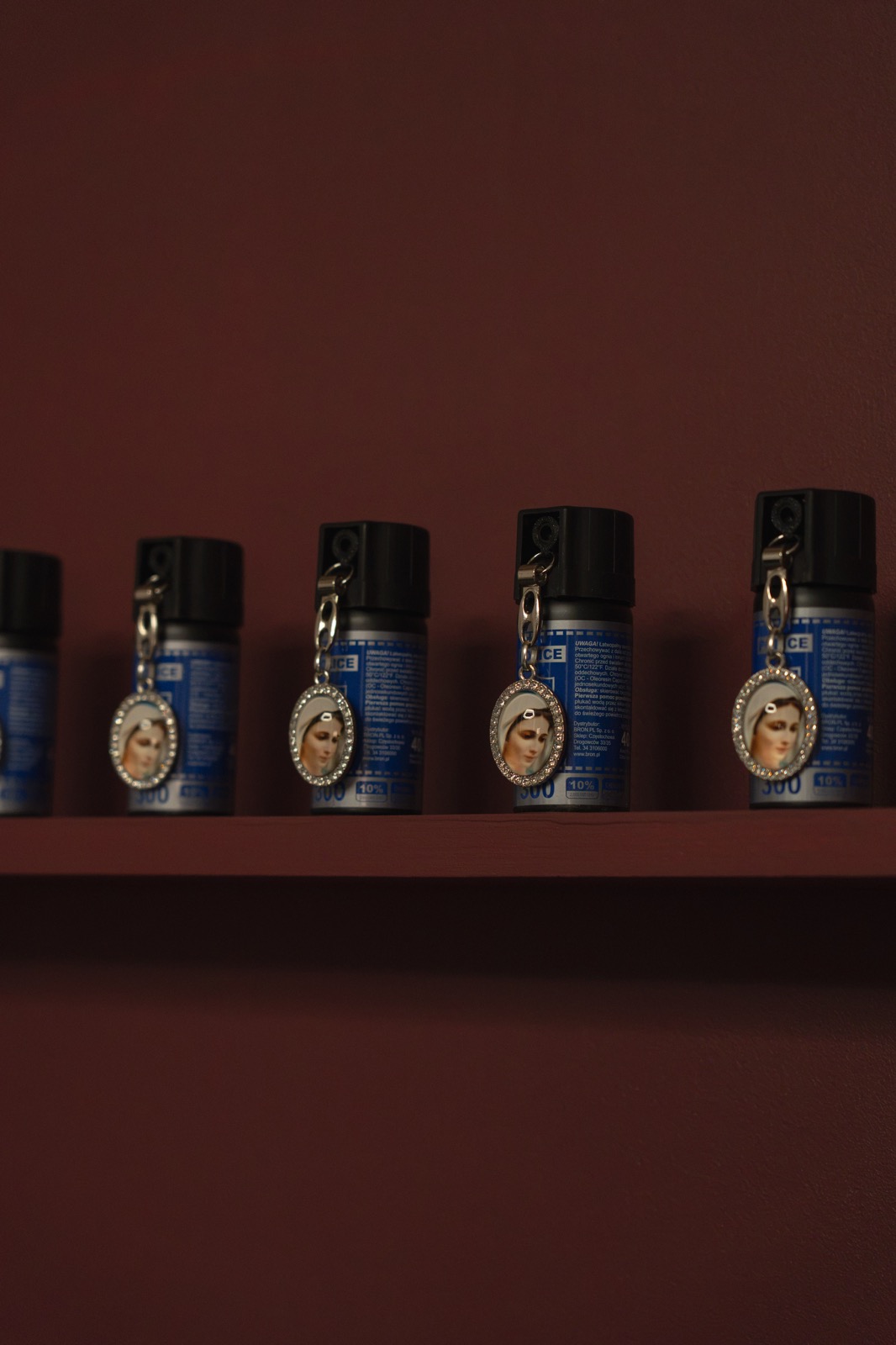
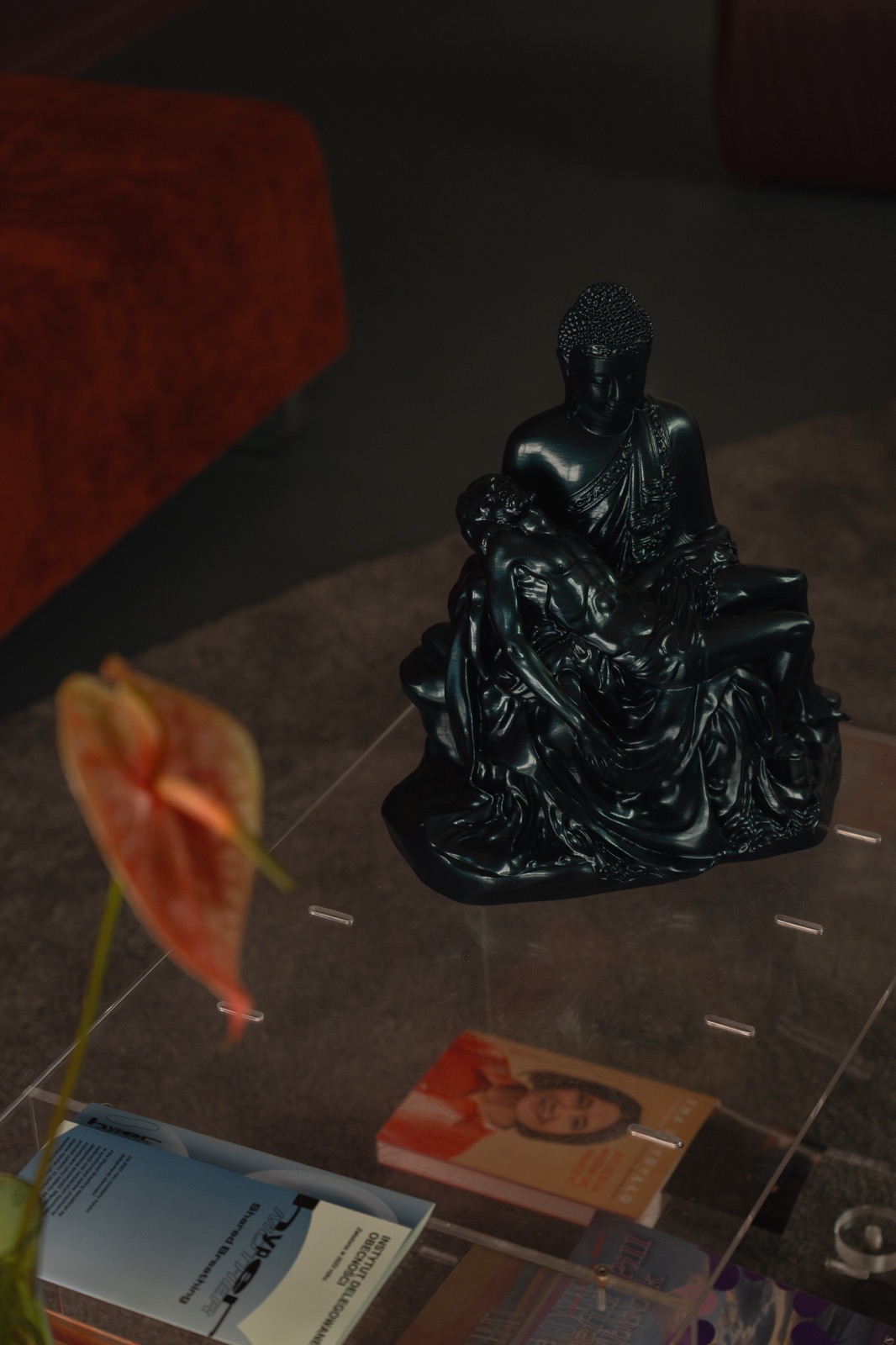
In other works, Adamau takes familiar cultural images and relocates them within the context of the fictional institution. His interpretation of Hieronymus Bosch’s The Garden of Earthly Delights transforms the paradise-like environment into an organised world in which pleasure is accompanied by a figure who watches over and cares for it. In Pietà, Christian tradition encounters a Buddhist figure: the physical gesture of care and mourning meets the idea of liberation from attachment and suffering. In Initiation, an ordinary pepper spray canister is combined with an image of the Virgin Mary — practical and symbolic mechanisms of protection are brought together in a single object.
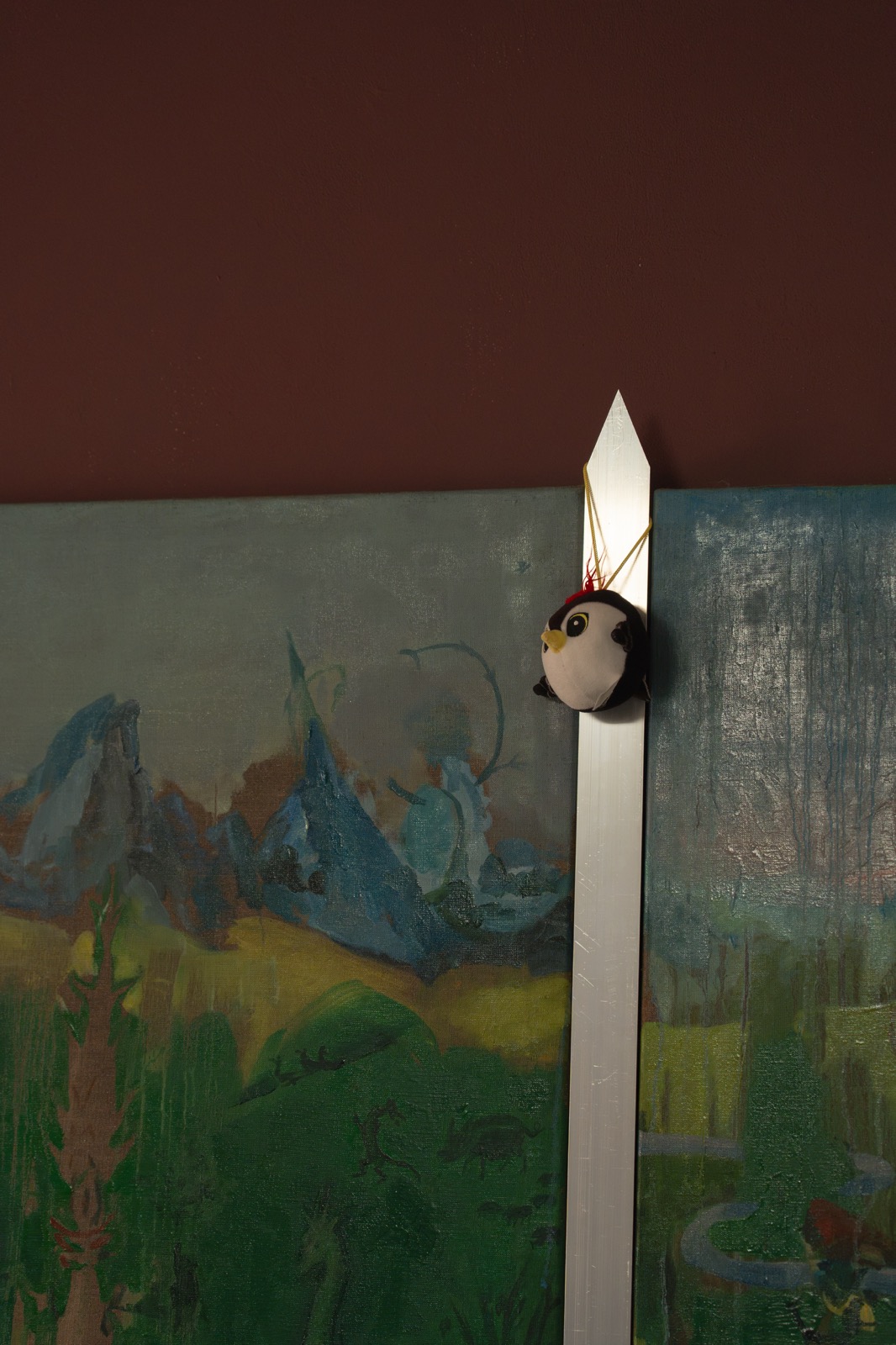
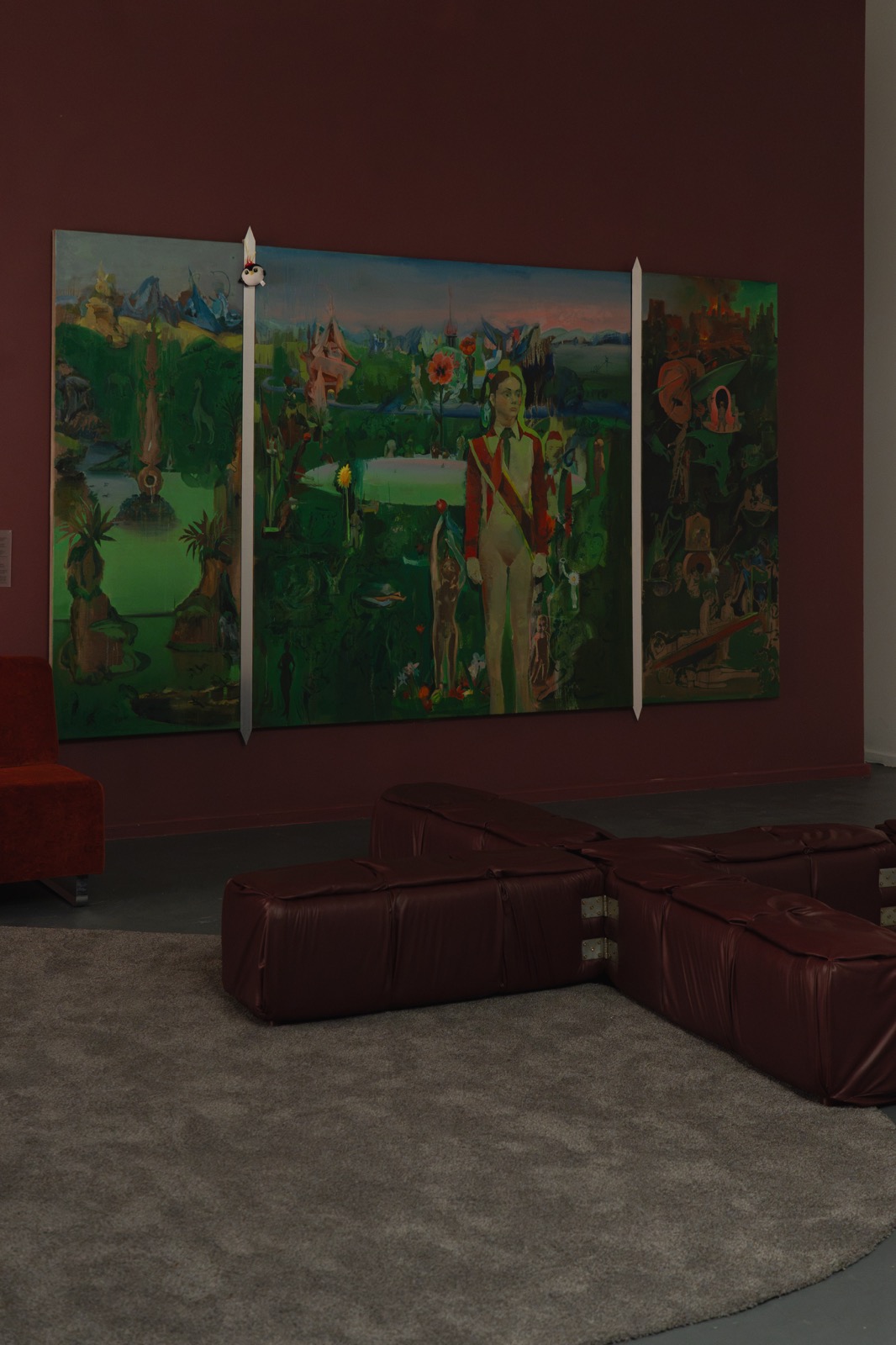
These combinations create a tension characteristic of hyperMOTHER: what protects can also observe; what cares can also regulate; what provides relief can require us to surrender part of our autonomy.
Shared Breathing does not offer a simple answer, nor does it oppose “good” autonomy to “bad” control. Instead, it explores the space between them — the space in which we already live. We increasingly delegate parts of our decisions to medicine, technology, institutions, algorithms, and other people. Sometimes this is a necessity, sometimes a choice, and sometimes a desire to escape the exhaustion of constant self-management.
What happens to our freedom when someone else begins to take care of us?
The question remains open — and becomes part of the visitor’s experience of the exhibition.
Artistic project: Alexander Adamau
Venue: Museum of Free Belarus, Foksal 11, Warsaw
Dates: 18 September – 4 October 2026
The project is supported by Art Power Belarus and funded by the European Union.